
How UNC Health Used AI to Cut Billing Delays, and What It Means for Small North Carolina Clinics
How UNC Health Used AI to Cut Billing Delays, and What It Means for Small North Carolina Clinics
What happens when a big North Carolina hospital system puts AI to work on its billing paperwork? UNC Health just shared the results, and they are hard to ignore: denied insurance claims that used to sit for 60 days now go out the door in three. Here is what happened, and what a small clinic or local business can take from it.
What happened: the numbers UNC Health reported
UNC Health's revenue cycle team described the results to the Healthcare Financial Management Association (HFMA) in an article published November 9, 2026 and updated November 13. The numbers come from Christina Slemp, the system's vice president of revenue cycle and financial services, speaking at HFMA's Annual Conference.
Claim appeals are moving much faster. Using AI and robotic process automation to support claim appeals, UNC Health increased appeals throughput by more than 2,000 appeals this year. Slemp put it plainly: denials that used to wait 60 days to get looked at now go out the door within three days.
Billing codes are more accurate. AI used for evaluation and management coding significantly improved coding accuracy for physician billing, which Slemp said gave the system "a huge financial lift." Coding is the work of matching a visit to the right billing code, and getting it wrong means denied claims and lost revenue.
An AI agent is answering patients directly. A patient-facing AI agent saved 2,000 contact center hours in five months this year, handling 18,000 conversations without needing to escalate to a customer service representative. It also contributed to a 33 percent reduction in messages sent through MyChart, the patient portal.
This was not an overnight project. UNC Health has deployed 100 AI use cases across the organization, and it set up a responsible AI governance framework back in March 2023, with a committee drawn from across the organization.
Four lessons worth stealing
Slemp shared four lessons from the work. They apply well beyond hospitals.
Build governance in up front. "Governance should never be viewed as a barrier," she said. When the rules for keeping patient data safe are set first, teams can move faster afterward, not slower.
AI cannot fix a broken process. "When you lay AI over a broken process, it just exposes the process faster," Slemp said. Her team mapped the workflow first: where handoffs happen and where unnecessary steps creep in. Automating a bad process just creates a bad outcome at greater speed.
Start with a business problem, not a tool. "It is very important to know what your friction points are and where problems exist before you look at AI technology," she said. Seeing a shiny tool and then hunting for a use for it is backwards.
Do not lose sight of the human element. "Simplify first, automate second and then measure the impact for patients and staff," Slemp said. If the technology does not fit how people actually work, or patients do not trust it, it is not really solving anything.
What it means for a small clinic or local business
You do not run UNC Health. But if you run a small clinic, a dental practice, a physical therapy office, or any local business with a front desk, you have the same problem at a smaller scale: phones ringing while staff are busy, billing paperwork piling up, and customers waiting for answers after hours.
The pattern in UNC Health's results is the same one we keep seeing across North Carolina: find the repetitive job that eats staff time, automate that one job, and measure whether it helped. An AI agent answering "what are your hours, do you take my insurance, how do I reschedule" is the small-business version of what UNC Health built. Automated follow-ups on unpaid invoices are the small-business version of faster claim appeals. The tools for this are no longer enterprise-only, and our guide to free AI training for North Carolina small business owners shows how owners can learn them at no cost.
What to do next
If you run a rural clinic, check the funding deadline now. North Carolina's Rural Health Innovation Fund is about $20 million a year for rural providers to modernize technology, including AI tools and workflow improvements. The readiness intake closed October 31, so this applies only to clinics that completed it. For those clinics, the full application is due December 7, 2026, at 11:59 p.m., according to the official fund page at NCDIT. Our plain-English guide to the fund, including what it covers and the reimbursement catch, is here: https://www.mcmgs.com/blog/rural-health-innovation-fund-nc-clinics
Pick one repetitive job and fix the process first. Before buying any tool, write down the five questions your front desk answers most and the billing task that sits longest. That list is your starting point, and it is the same "start with the problem" step UNC Health took.
Get help building it. If the front desk is drowning in phone calls, or your website still just lists a number and hopes people call during business hours, that is work we do. We build practical websites, automation, and custom software for North Carolina shops, clinics, and contractors, and we start with your numbers, not a sales pitch. Start here: https://www.mcmgs.com/contact. We reply within 24 hours.
One transparent rate, quoted in writing before any work starts: no surprises, no open-ended billing. You pay for the work once and own it outright: no subscriptions, no licenses, no monthly fees to us.
Want the North Carolina AI and tech news that affects your business, in plain English, twice a week? Sign up for the NC Business Technology Briefing at https://www.mcmgs.com/blog.
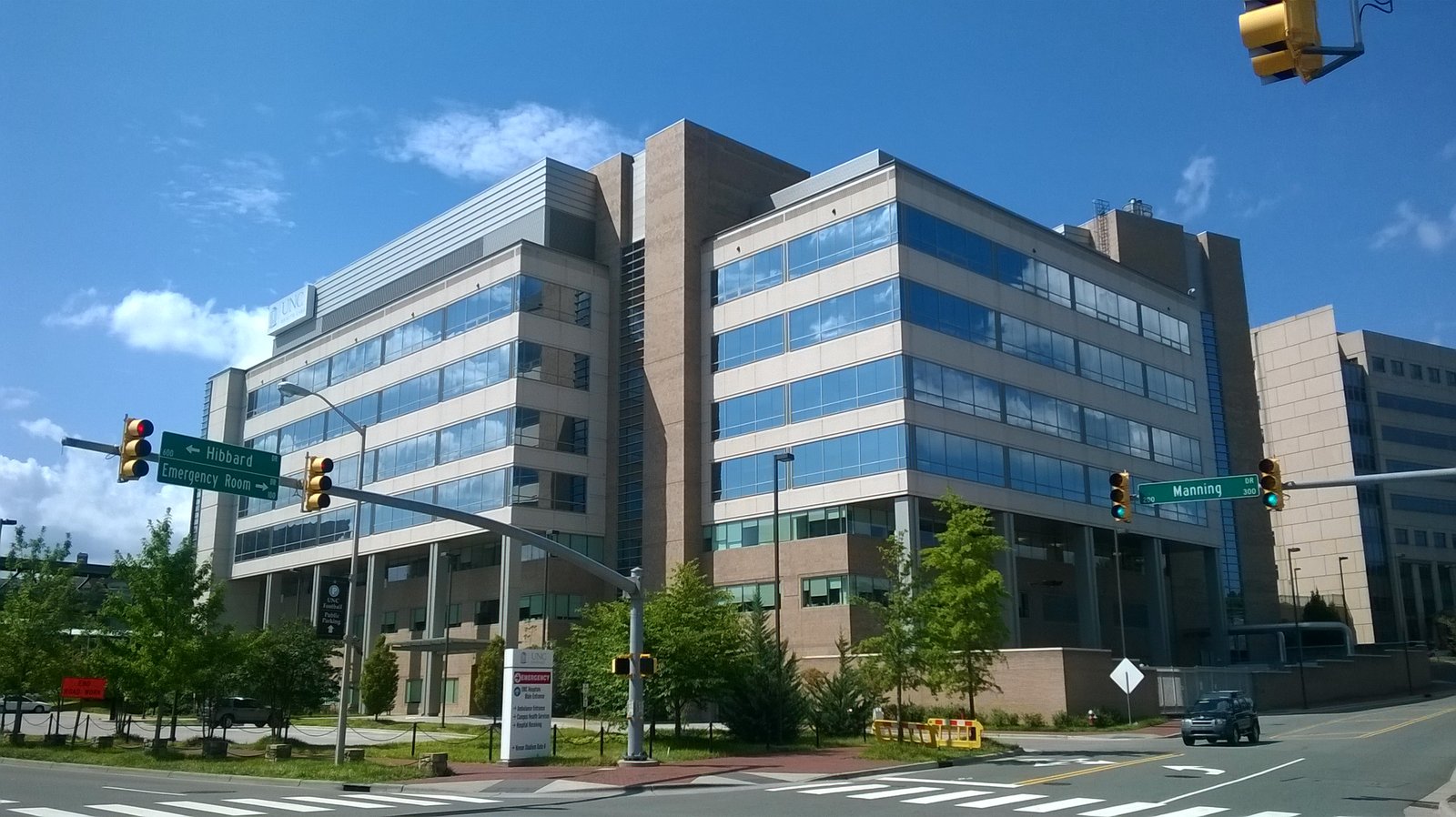
Cover photo: UNC Hospitals in Chapel Hill, North Carolina. Photo via Wikimedia Commons, CC0.
Source: HFMA, "UNC Health's road map for AI in revenue cycle: 4 insights," published November 9, 2026, updated November 13, 2026: https://www.hfma.org/revenue-cycle/unc-healths-road-map-for-ai-in-revenue-cycle-4-insights/ Rural Health Innovation Fund deadline verified November 15, 2026, on the official fund page: https://www.ncbroadband.gov/ruralhealthinnovation
North Carolina AI & tech news, translated into plain English.
At most twice a week, get the North Carolina technology shifts, grants, and practical automation guides that actually affect local businesses: what happened, what it means for you, and what to watch next. Stop with one-click unsubscribe or change your topics anytime.
Need Help Modernizing Your Operations?
Take our 2-minute interactive needs assessment and get a custom step-by-step action plan from McMillan General Services within 24 hours.